
SSC Jobs are among the most popular Central Government career options for students and job seekers in India. Almost every candidate preparing for a government job has heard about SSC, but beginners often have an important question: What is SSC, what types of SSC jobs are available, and which government posts can you get through SSC examinations?
SSC stands for Staff Selection Commission. It conducts competitive examinations and recruitment processes for various posts in Central Government Ministries, Departments and Organisations.
One of the biggest advantages of SSC Jobs is that recruitment opportunities are available for candidates with different educational qualifications. Depending on the examination and post, candidates with Class 10, Class 12, graduation, engineering or specialised qualifications may be eligible.
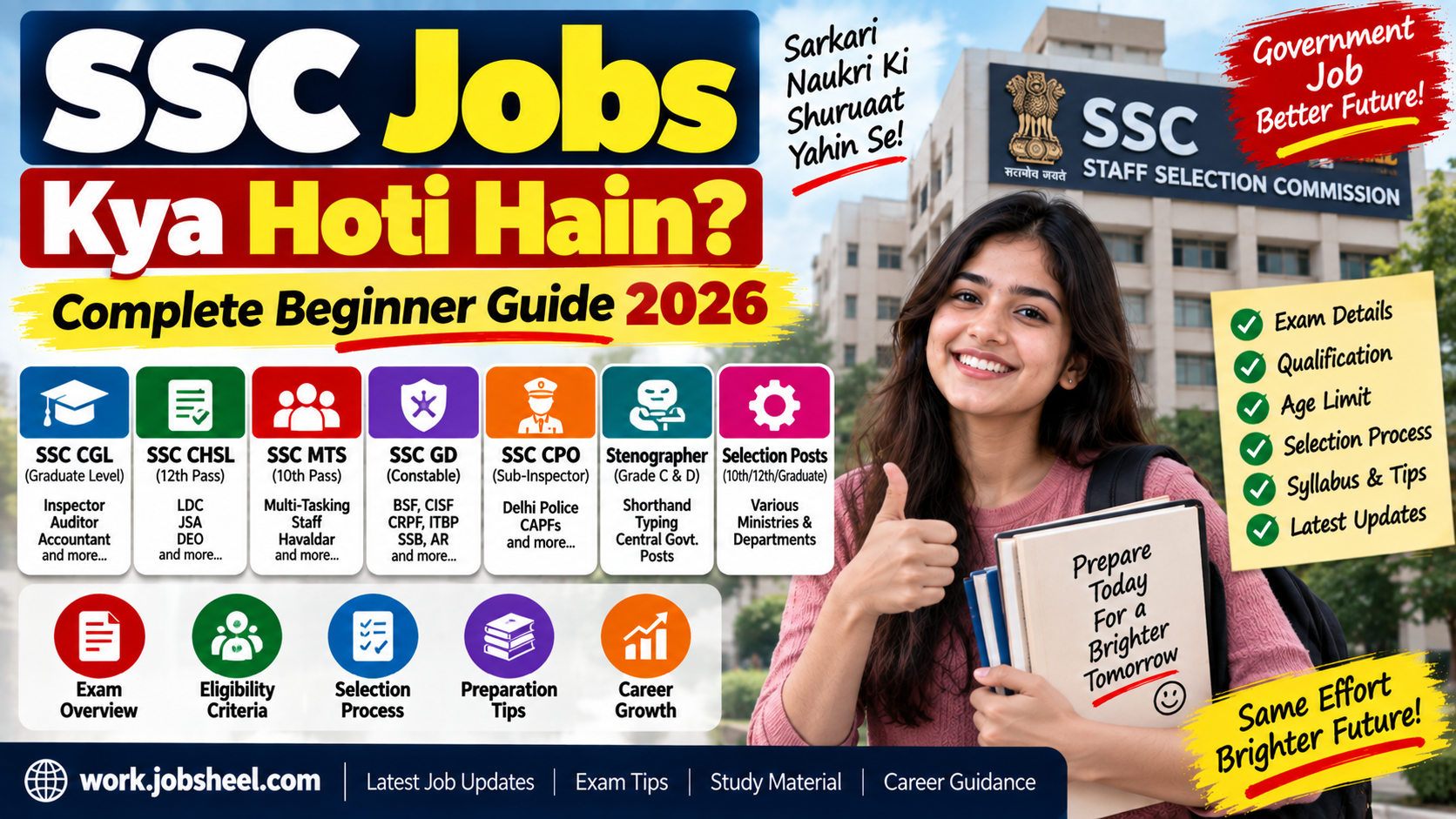
Major SSC examinations include Combined Graduate Level, Combined Higher Secondary Level, Multi-Tasking Staff and Havaldar, Constable GD, Sub-Inspector in Delhi Police and CAPFs, Stenographer, Selection Posts, Junior Engineer and Combined Hindi Translators examinations.
The SSC examination calendar for 2026–27 also includes major recruitments such as CGL 2026, Selection Posts Phase-XIV, CHSL 2026, Stenographer 2026, MTS and Havaldar 2026 and Sub-Inspector in Delhi Police and CAPFs Examination 2026.
If you want to explore government careers according to education level, also read our guides on 10th Pass Government Jobs, 12th Pass Government Jobs and Government Jobs After Graduation.
Table of Contents
10 Best SSC Jobs and Exams to Understand in 2026
There is no single examination for all SSC Jobs. Every recruitment has its own educational qualification, age conditions, examination pattern and selection stages.
Beginners should first understand the major SSC examinations and then select the ones that match their qualifications and career goals.
1. What Is SSC and What Does It Do?
SSC, or the Staff Selection Commission, is a Central Government recruitment organisation that conducts examinations for recruitment to various Government posts.
In simple terms, when participating Central Government Ministries, Departments and Organisations report vacancies covered by SSC recruitment, the Commission conducts the applicable examination and selection process.
Candidates who successfully complete all required stages can be recommended or nominated for appointment according to merit, post preference, vacancy position and recruitment rules.
What Types of SSC Jobs Are Available?
SSC Jobs are available in different types of Central Government organisations. Depending on the examination, candidates may compete for office, clerical, audit, accounts, taxation, engineering, translation, police, paramilitary and support positions.
This is why SSC should not be treated as one single job or one single examination.
A graduate candidate may target CGL, while a Class 12 candidate may consider CHSL. Matriculation-level candidates can explore eligible MTS, Havaldar, GD and Selection Post recruitment.
The safest source for examination notices, results, answer keys and schedules is the official Staff Selection Commission website.
2. SSC CGL – Popular SSC Jobs for Graduates
SSC CGL stands for Combined Graduate Level Examination. It is one of the most popular SSC Jobs recruitment routes for graduates.
Through SSC CGL, candidates can compete for various Group-B and Group-C positions in Central Government Ministries, Departments and Organisations.
Depending on the recruitment cycle, posts can include Assistant Section Officer, Inspector, Auditor, Accountant, Tax Assistant and several other positions.
SSC CGL Qualification
For most CGL posts, the basic educational requirement is a bachelor’s degree from a recognised university or an equivalent qualification.
However, some specialised posts can have additional requirements relating to Mathematics, Statistics or other subjects. Candidates must therefore verify the post-wise eligibility conditions in the current notification.
SSC CGL Preparation
Important preparation areas generally include Quantitative Aptitude, General Intelligence and Reasoning, English and General Awareness according to the applicable examination scheme.
SSC CGL is particularly attractive to candidates who want a structured Central Government career after graduation.
Graduates can also read our detailed guide to Government Jobs After Graduation for additional career options.
3. SSC CHSL – SSC Jobs After Class 12
SSC CHSL stands for Combined Higher Secondary Level Examination. It is one of the most important SSC Jobs routes for eligible Class 12 candidates.
Depending on the recruitment cycle, CHSL can include posts such as Lower Divisional Clerk, Junior Secretariat Assistant and Data Entry Operator.
The major advantage of CHSL is that candidates can target Central Government opportunities without waiting to complete graduation.
SSC CHSL Selection Process
CHSL recruitment includes Computer Based Examination stages and can also include Skill Test or Typing Test requirements depending on the post.
The CHSL 2025 Tier-II Skill Test and Typing Test process continued into April 2026, demonstrating why practical typing and computer skills can be important for selected posts.
CHSL aspirants should prepare English, General Intelligence, Quantitative Aptitude and General Awareness according to the official syllabus.
If you are targeting a typing-based post, do not wait until the written examination is over before starting typing practice.
You can also explore other opportunities in our 12th Pass Government Jobs guide.
4. SSC MTS and Havaldar Jobs
SSC Multi-Tasking Staff and Havaldar recruitment is another important route for candidates looking for Matriculation-level SSC Jobs.
Multi-Tasking Staff positions can involve general support duties in various Central Government Ministries, Departments, Offices and other eligible organisations.
Havaldar vacancies are associated with specified Government organisations such as CBIC and CBN according to the recruitment notification.
Difference Between MTS and Havaldar
An important difference is that Havaldar recruitment can include Physical Efficiency Test and Physical Standard Test requirements in addition to the computer-based examination.
This means Havaldar aspirants need to focus on physical fitness as well as academic preparation.
For MTS preparation, candidates should follow the current syllabus covering applicable numerical ability, reasoning, General Awareness and language components.
Class 10 candidates can also explore our guide to 10th Pass Government Jobs.
5. SSC GD Constable – Uniformed SSC Jobs
SSC GD Constable is one of the most popular SSC Jobs examinations for candidates who want a uniformed field-service career.
The examination is used for recruitment to relevant Constable and Rifleman GD positions in participating Central Armed Police Forces and organisations according to the notification.
Participating forces can include organisations such as BSF, CISF, CRPF, ITBP, SSB and Assam Rifles, subject to the recruitment cycle.
SSC GD Selection Process
SSC GD is not an ordinary desk-job recruitment. Selection can include a Computer Based Examination followed by Physical Standard Test, Physical Efficiency Test, medical examination and document verification.
Running standards, height, chest measurements and medical requirements can vary according to gender, category and recruitment rules.
Candidates should therefore begin physical training during the initial preparation stage instead of waiting until the written examination result.
The latest GD eligibility conditions should always be checked through the official SSC recruitment portal.
6. SSC CPO – Sub-Inspector Jobs After Graduation
Graduate candidates interested in Police and Central Armed Police Forces can consider the SSC CPO recruitment route.
SSC CPO recruitment is conducted for Sub-Inspector in Delhi Police and Central Armed Police Forces according to the vacancies and eligibility requirements of the relevant examination cycle.
This is one of the important graduate-level SSC Jobs for candidates interested in uniformed and field-oriented careers.
SSC CPO Preparation
Preparation can include General Intelligence and Reasoning, General Knowledge and General Awareness, Quantitative Aptitude and English according to the official examination scheme.
Physical preparation is equally important because applicable physical tests and medical standards form an important part of recruitment.
The work profile of a Sub-Inspector differs considerably from a conventional clerical Central Government position.
Candidates who prefer field work, law enforcement and disciplined service may find SSC CPO attractive.
7. SSC Stenographer Grade C and Grade D
SSC Stenographer Grade C and Grade D recruitment provides skill-based SSC Jobs for candidates who are willing to learn shorthand and transcription.
Stenographers can be recruited for various Central Government Ministries, Departments and Organisations.
The work can include taking dictation from officers, preparing shorthand notes, transcribing information and assisting with official correspondence and documentation.
Why the Stenography Skill Test Matters
SSC Stenographer is different from ordinary written-only recruitment because practical skill is essential.
Candidates need to develop shorthand and transcription speed in addition to preparing for the computer-based examination.
Shorthand can initially appear difficult, but regular practice over several months can gradually improve speed and accuracy.
This career can suit candidates who want Central Government office work and are willing to develop a specialised professional skill.
8. SSC Selection Posts
SSC Selection Posts can be confusing for beginners because there is no single fixed job profile comparable to one specific examination post.
Different Central Government Ministries and Departments can report specific vacancies that are recruited through the Selection Post examination process.
One major advantage is that Selection Posts can provide SSC Jobs across different educational levels.
Selection Posts by Qualification
Selection Post recruitment can include Matriculation-level, Higher Secondary 10+2-level and Graduation-and-above-level posts.
However, qualification is post-specific. One vacancy may accept Class 10, another may require Class 12, while another can require graduation, a specialised subject or work experience.
Candidates should carefully verify the Post Code, Department, Qualification and Age Limit for every Selection Post application.
If applying for more than one post category, candidates should follow the separate application requirements specified by SSC.
9. How Does the SSC Jobs Selection Process Work?
The selection process is not identical for all SSC Jobs.
Many major examinations begin with a Computer Based Examination, but later stages depend on the nature of the post.
Additional stages can include Tier-II examination, Skill Test, Typing Test, Physical Efficiency Test, Physical Standard Test, medical examination, document scrutiny or document verification.
Examples of Different SSC Selection Stages
SSC CGL can involve multiple computer-based tiers or modules according to the current examination scheme.
CHSL can include typing or skill tests. SSC GD includes physical and medical stages, while Havaldar candidates can face PET and PST requirements.
Stenographer recruitment includes a stenography skill test, while Selection Posts can involve post-specific skill testing and document scrutiny.
This is why clearing one computer-based paper does not automatically mean immediate appointment.
Candidates should read the complete selection process in the relevant official notification and keep original educational and category documents ready.
10. How to Start Preparing for SSC Jobs
The best way to begin preparation for SSC Jobs is to first choose the correct examination according to your qualification and career preference.
Do not start studying random topics before checking the official syllabus.
Choose SSC Exams According to Qualification
Class 10 candidates can explore eligible MTS, Havaldar, GD and Selection Post opportunities.
Class 12 candidates can consider CHSL, Stenographer and Higher Secondary-level Selection Posts.
Graduates can consider CGL, CPO and graduate-level Selection Posts.
Complete SSC One-Time Registration
SSC states on its official website that One-Time Registration is a mandatory prerequisite for applying to Commission examinations.
Candidates should complete registration using accurate personal and educational information and keep their login details secure.
Applications and current candidate resources are available through the official SSC website.
Study the Core Subjects
Depending on the examination, common preparation areas can include Quantitative Aptitude, Reasoning, English and General Awareness.
Add exam-specific subjects and practical requirements separately.
For typing-based recruitment, practise typing regularly. Stenographer aspirants should practise shorthand, while GD and CPO candidates should maintain physical training.
Use Previous Papers and Mock Tests
Previous-year questions help candidates understand the type and difficulty of questions asked in an examination.
Mock tests can improve time management, accuracy and examination confidence.
Use the official notification and syllabus as your primary preparation reference rather than depending entirely on random social-media videos.
Which SSC Jobs Can You Choose According to Qualification?
The following overview can help beginners understand which major SSC Jobs may be relevant at different educational levels.
SSC Jobs After Class 10
Eligible candidates can explore MTS, Havaldar, SSC GD and Matriculation-level Selection Posts according to the current notification.
SSC Jobs After Class 12
Class 12 candidates can consider CHSL, Stenographer and Higher Secondary-level Selection Posts where they meet all prescribed conditions.
SSC Jobs After Graduation
Graduates can explore SSC CGL, SSC CPO and Graduation-level Selection Posts, subject to post-specific requirements.
SSC Junior Engineer
Candidates with eligible engineering qualifications can consider the SSC Junior Engineer examination for Civil, Mechanical, Electrical and other disciplines covered by the applicable notification.
SSC Combined Hindi Translators
Candidates with prescribed specialised Hindi and English translation-related educational qualifications can explore the Combined Hindi Translators Examination.
Major Benefits of SSC Jobs
SSC Jobs remain popular because they provide access to a wide variety of Central Government careers.
Depending on the post, selected candidates may work in Central Government Ministries, Departments, law-enforcement organisations, audit and accounts offices, taxation departments and other participating organisations.
Salary generally follows the applicable Government pay level, allowances and service rules for the concerned post.
Another advantage is variety. Candidates can choose between office-oriented, clerical, technical, field-based and uniformed careers.
However, candidates should not select an examination only because it offers a “Government job.”
Always understand the actual duties, posting possibilities, transfer liability, physical standards, career progression and working environment before choosing post preferences.
Important Documents for SSC Jobs
Candidates preparing for SSC Jobs should keep educational and identity documents organised before applications and later verification stages.
- Class 10 certificate and marksheet
- Class 12 certificate and marksheet where applicable
- Graduation degree and marksheets where applicable
- Valid identity proof
- Recent photograph and signature as required
- Category certificate where applicable
- EWS certificate where applicable
- PwBD certificate where applicable
- Post-specific educational or technical certificates
- Other documents specified in the examination notification
Certificate formats, validity requirements and crucial dates can vary, so candidates should always follow the latest examination notice.
Frequently Asked Questions About SSC Jobs
What Is the Full Form of SSC?
SSC stands for Staff Selection Commission. It conducts recruitment examinations for various Central Government posts.
Which SSC Exam Is Best After Class 10?
Eligible Class 10 candidates can explore recruitments such as MTS, Havaldar, SSC GD and applicable Matriculation-level Selection Posts. Exact eligibility must be verified from the notification.
Which SSC Exam Is Best After Class 12?
SSC CHSL is one of the major options after Class 12. Candidates may also consider Stenographer and Higher Secondary-level Selection Posts if they meet all eligibility conditions.
Which SSC Jobs Are Available After Graduation?
Graduates can explore SSC CGL, SSC CPO and eligible Graduation-level Selection Posts, along with other specialised recruitments for which their qualifications are accepted.
Is One-Time Registration Mandatory for SSC?
Yes. SSC’s official website states that One-Time Registration is a mandatory prerequisite before candidates can apply online for Commission examinations.
Do All SSC Jobs Have the Same Age Limit?
No. Age requirements vary by examination, post, category and recruitment cycle. Candidates should always check the current notification.
Does Clearing an SSC Written Exam Guarantee a Job?
No. Depending on the examination, candidates may need to complete additional tiers, typing tests, skill tests, physical tests, medical examinations, document scrutiny or other stages before final selection.
Where Can I Check Genuine SSC Notifications?
Candidates should use the official Staff Selection Commission website for examination notices, results, schedules, answer keys and other recruitment information.
Conclusion – Start Preparing for SSC Jobs
SSC Jobs provide some of the most important routes for building a Central Government career in India.
Staff Selection Commission conducts major examinations such as CGL, CHSL, MTS and Havaldar, GD Constable, CPO Sub-Inspector, Stenographer, Selection Posts, Junior Engineer and Combined Hindi Translators recruitment.
The correct examination depends primarily on your educational qualification, age, career preference and ability to meet any applicable skill or physical requirements.
Beginners should select one or two suitable examinations first, download the official syllabus, study previous-year questions and create a realistic preparation plan.
Regularly checking the official SSC website is extremely important because examination dates, vacancies, eligibility rules, application windows and recruitment procedures can change.
For more career guides, visit Work JobSheel and explore our articles on 10th Pass Government Jobs, 12th Pass Government Jobs and Government Jobs After Graduation.
Disclaimer
Disclaimer: This article is intended only for educational and general job-awareness purposes. SSC vacancies, educational qualifications, age limits, reservation rules, pay levels, examination patterns, skill tests, physical standards, application dates and selection procedures can change between recruitment cycles.
Before applying for any SSC examination, candidates should carefully check the latest official notification and updates available on the Staff Selection Commission website.
work.jobsheel.com is not affiliated with the Staff Selection Commission, Government of India or any Government Ministry or Department and does not guarantee selection or Government employment.
Never pay an agent or unknown person claiming that they can guarantee selection in an SSC examination or provide a Government job. Use official SSC sources as the final authority for recruitment-related information.

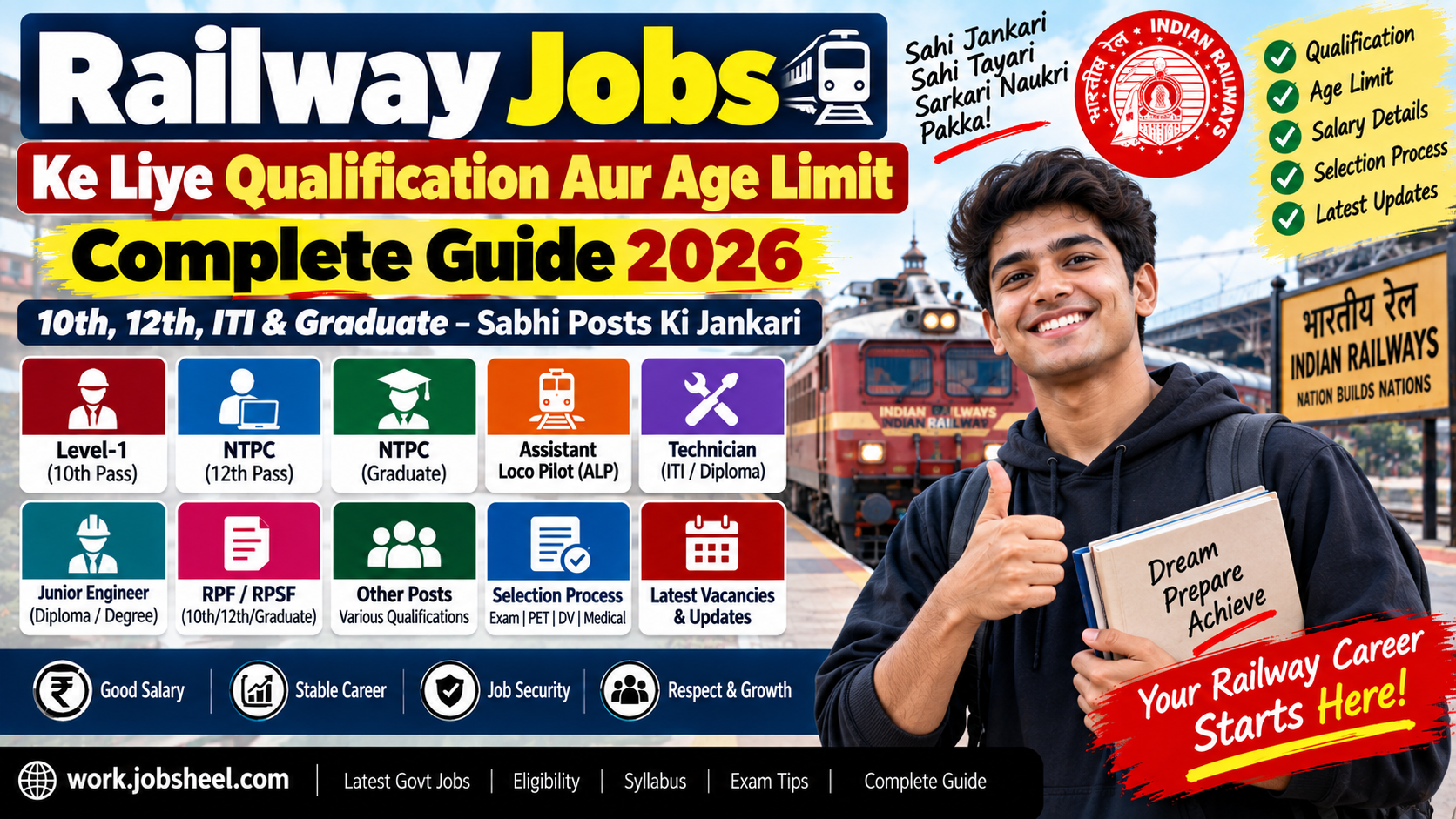
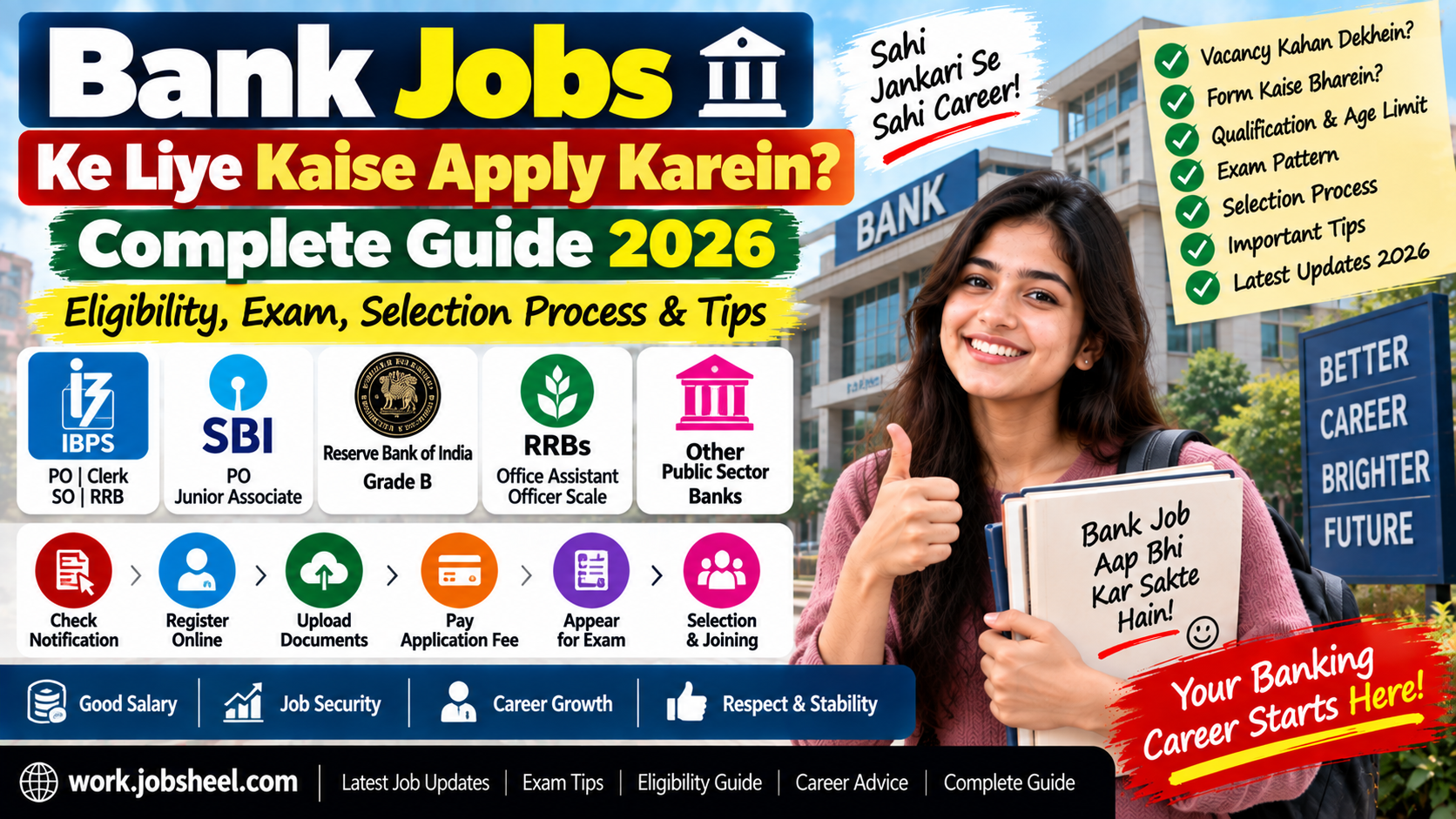
[…] If you are also exploring other career options after graduation, read our detailed guide on Government Jobs After Graduation. You can also explore our complete SSC Jobs guide. […]
[…] Candidates can also explore our guides on 10th Pass Government Jobs, 12th Pass Government Jobs and SSC Jobs. […]